By Tom Adams (60 Decibels), Malavika Rangarajan (60 Decibels), and Jente Janssen (ETG)
Pick up a bag of coffee or a bar of chocolate in any supermarket and you will likely find a promise of ethical sourcing – often backed by certifications, audits, and carefully worded commitments.
But consider a more basic question: do we really know what is happening to the people behind these products?
Not in theory, or in policy, but in practice. Are children working on farms? Do workers feel able to leave their jobs on time? Are women safe from harassment? Are farming families earning enough to live on?
Despite a decade of progress in supply chain transparency, the honest answer is often: not really.
This is not for lack of effort. Companies have invested heavily in audits, standards, and reporting across their supply chains. But when it comes to the most important outcomes – what is actually happening in people’s lives – the picture remains incomplete.
At its core, the problem is threefold: methodological, operational, and economic.
First, these are sensitive issues. People working in supply chains do not always feel able to answer questions about those topics honestly, auditors cannot get to the root of these issues.
Second, supply chains are vast, fragmented, and constantly shifting. Farmers are dispersed across rural landscapes, producing different qualities of crops and selling into overlapping networks of buyers.
And third, collecting reliable data across these systems – frequently enough to be useful – is not just difficult, it is often prohibitively expensive.
The result is a paradox: the need for better data has never been greater, but the approaches currently used to collect the produce it, such as audit, struggle to operate at the scale, cost, and precision required.
What if the challenge is not just asking better questions – but building a better model for answering them?
Methods: The Limits of Asking Direct Questions
Most approaches to measuring supply chain risks still rely on a straightforward premise: ask people directly, and aggregate the answers.
In practice, this means audits or surveys with clear, binary questions. Do you employ children? Are workers paid as agreed? Do women experience harassment? These approaches are easy to standardize and compare. They produce data that fits neatly into dashboards and reports.
But they depend on an assumption that rarely holds, that respondents feel both safe and willing to tell the truth.
In reality, the dynamics are more complicated. For a farmer, admitting to employing underage labour may carry social stigma or perceived risk. For a worker, acknowledging coercion or unsafe conditions may feel like jeopardizing their livelihood. Even when confidentiality is assured, these concerns do not disappear – they are shaped by local norms, economic pressures, and power relationships that extend far beyond the moment of the interview.
The result is a well-known phenomenon: social desirability bias – the tendency to give answers that are acceptable, rather than accurate.
This matters because it distorts the picture. When the most sensitive issues are also the most important, direct questioning tends to underestimate risk. Companies may believe they understand where problems lie, but in practice they are often seeing only part of the story.
Operations and Economics: The Problem of Scale
Even if the questions were perfect, a second challenge remains: scale.
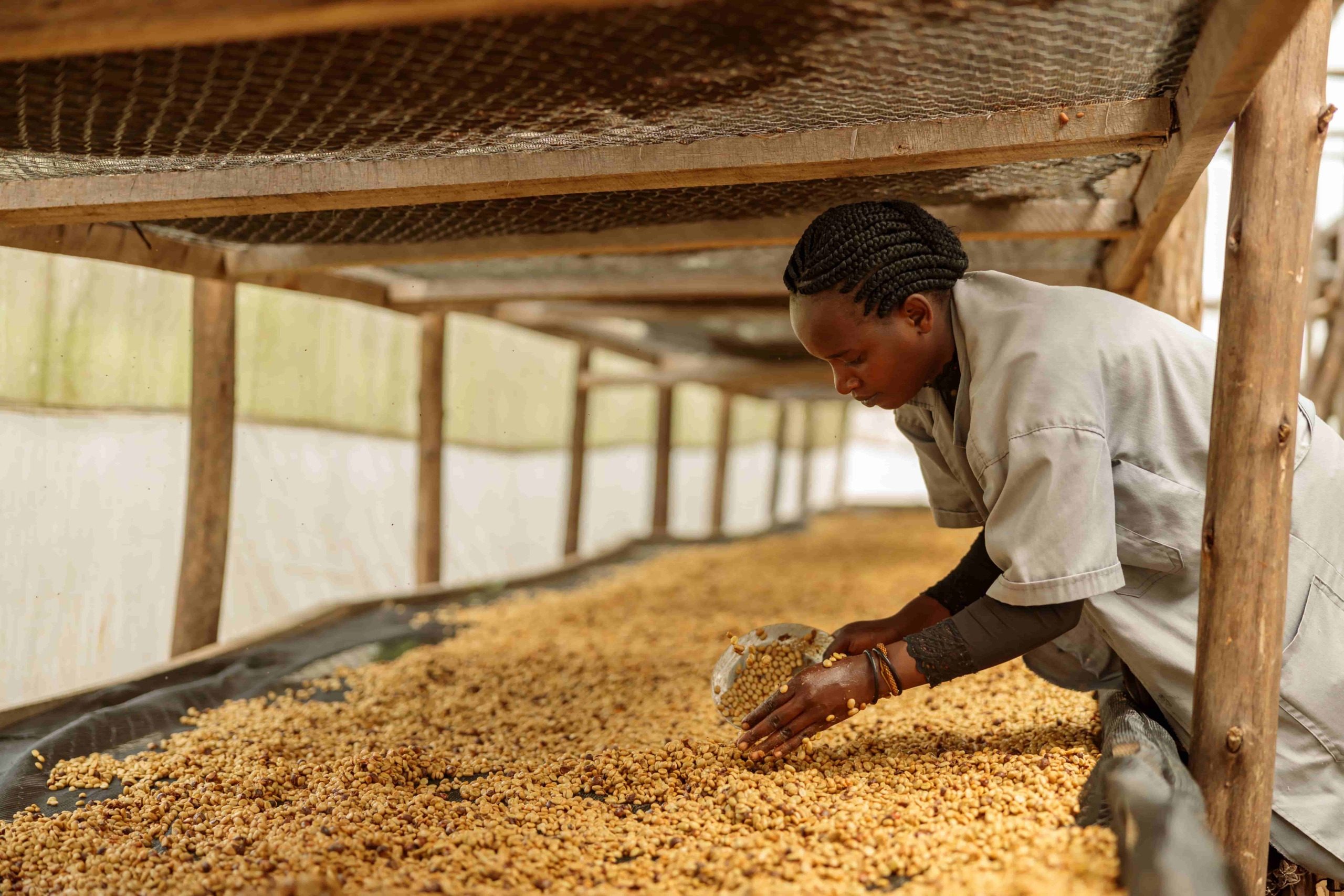
Supply chains like coffee are not linear. They are sprawling systems, with thousands – sometimes millions – of small producers, intermediaries, and buyers. The same farmer may sell to multiple traders. The same region may supply multiple brands. To measure risk properly, data needs to be collected across wide geographies and comparable over time.
For a single company to do this independently is costly and complex. For an entire sector to do it in parallel is inefficient. In practice, this often means that data is collected sporadically, in silos, and at a level of detail that is insufficient for decision-making.
In other words, even if companies had perfect tools, they would still struggle to deploy them at the scale required.
A Different Way of Listening – and Measuring
In Uganda’s Greater Masaka region, a group of coffee traders set out to address both challenges at once.
Through the Uganda Coffee Landscape Action Partnership (UCLAP), three companies ETG, Ugacof (Sucafina) and Neumann Kaffee Gruppe – typically competitors – came together around a shared concern: they did not have a sufficiently clear understanding of the risks in their indirect supply chains – i.e. the part of the supply chain where the traders have no direct buying relationship to a specific farm.
With new regulatory expectations emerging, particularly in Europe, better understanding of the risks in the supply chainsm even those scattered across thousands or tens of thousands of smallholder farmers becoming increasingly essential. Just as importantly, there was recognition that fragmented, company-by-company approaches would not deliver the scale or consistency required.
Working with 60 Decibels, a global impact measurement and human rights due diligence company focussing especially on hard to measure risk such as forced and child across disperse agricultural supply chains, the partnership tested a different model – one that combined better methods with a more practical, shared approach to data collection.
On the methodological side, the study used an indirect technique known as the List Experiment. Instead of asking respondents to disclose sensitive behaviours directly, they were asked how many statements applied to them, without specifying which ones. This creates space for more honest responses, particularly on issues like child labour or gender-based violence.
At the same time, the study was designed as a syndicated, landscape-level exercise. Data was collected across one of Uganda’s largest coffee producing regions, Greater Masaka, that all three companies operate in, with results shared among participating companies. This reduced duplication, improved coverage, and made it possible to build a dataset at a scale that would have been difficult for any single actor to achieve alone.
What emerged was not just better data, but a more viable data collection model – one that can be repeated, expanded, and sustained even beyond the current pilot.
From Data to Decisions
The findings were striking.
Across multiple risk areas, indirect methods revealed significantly higher levels of sensitive issues than direct questioning – by a factor of up to five times. What appeared relatively contained was, in reality, more widespread.
But the most useful insight was not simply that risk was higher. It was that it was uneven across types of farmers as well as the sub-districts that make up Greater Masaka. Certain districts showed consistently higher levels of risk across multiple indicators. For the first time, companies could see not just that risks existed, but where they were geographically concentrated.
This changes how companies act. And not only can the work collaboratively to collect better data, but they can also work in partnership to implement interventions where they are most exposed and are likely to have the greatest impact. Instead of broad, diffuse programmes, efforts can be more targeted and aligned with business reality.
Because the data collection model is designed for repeated measurement, the UCLAP consortium
can track change over time – moving from compliance to learning, and from activity to outcomes.
Why This Matters
This approach is not just a technical improvement. It reflects a shift in how supply chains can be better understood and managed.
For farmers and workers, better data increases the likelihood that interventions are more effectively targeted, relevant and effective. For companies, it provides a clearer view of risk and a stronger basis for long-term relationships with sector partners, suppliers and farmers. And for consumers, it offers the possibility of greater transparency – grounded in evidence, rather than assumption.
None of this replaces existing standards or certification schemes.
Seeing More Clearly – and Acting on it
Looking forward, this work presents an opportunity for companies who have long been serious about understanding and addressing these issues, but have struggled to do so in the light of the complexities of these supply chains and costs of gathering such data.
The work in Uganda offers an example of what that a sector-wide solution might look like: a collaborative landscape based approach using better questions, and a more scalable model for asking them.
Ultimately, the goal is not just to generate more data, but to generate the kind of data that leads to better decisions – and, over time, better outcomes for farming communities and the wider coffee sector.