Babban Gona: Insights on Digital Payments for Nigerian Maize Farmers
Implementing digital payments in agricultural supply chains is more complex than it might appear. What works well for one company may not translate to another — much depends on how a business is organised, how farmers are engaged, and what payment solutions can realistically fit within existing structures. For Babban Gona, whose farmers operate within Trust Groups and receive payments via a shared prepaid card, the question isn’t simply whether digital payments are a good idea, but whether this particular model works for these particular farmers. By listening to them directly, we aim to help stakeholders across agricultural value chains think more carefully about what doing digital well looks like in practice.
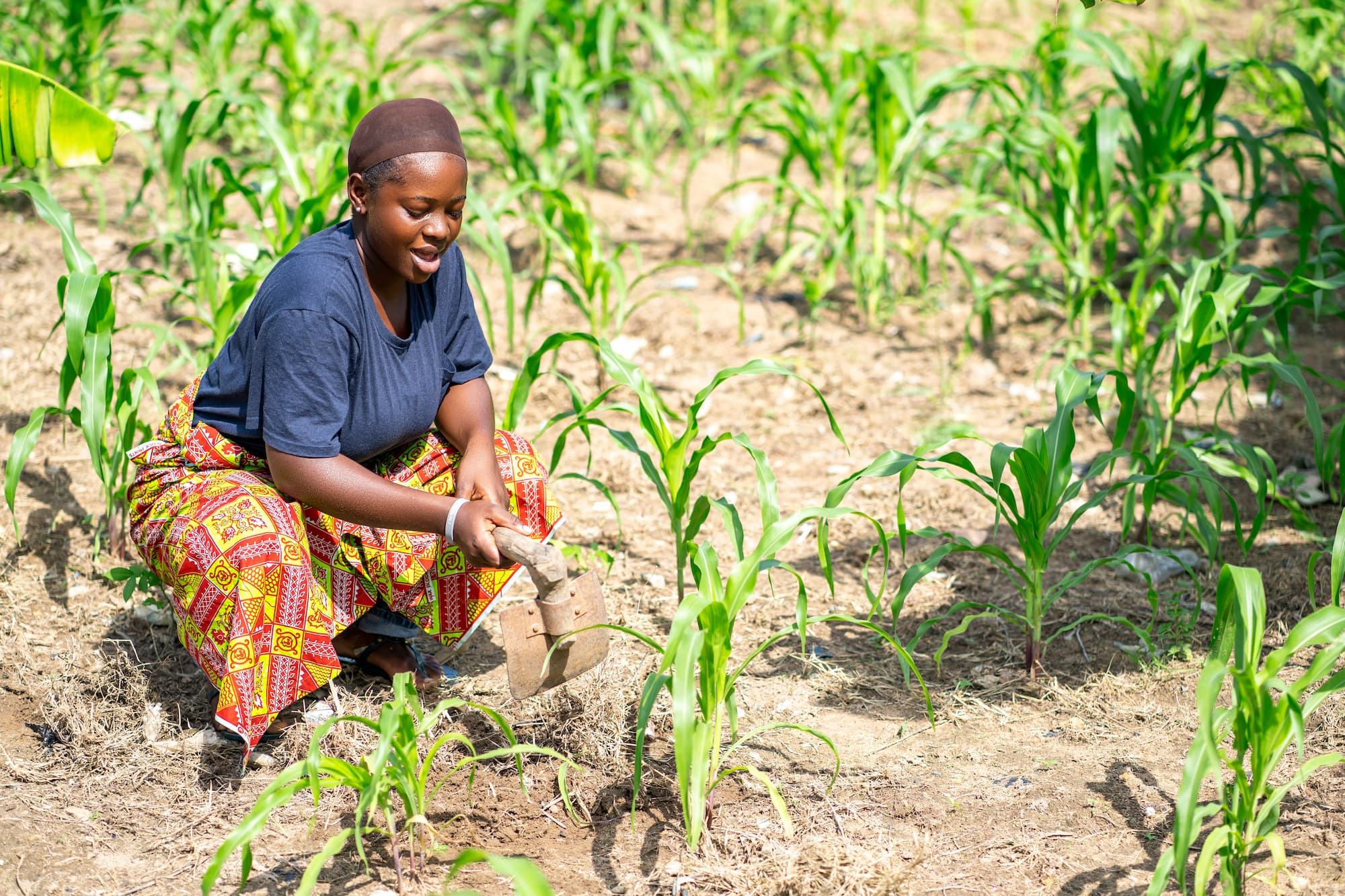
Babban Gona is a social enterprise founded in 2012 that supports smallholder farmers in Nigeria, providing inputs on credit that farmers repay through crop sales at the end of the season. Farmers are organised into small Trust Groups, each issued a Babban Gona prepaid card held by a lead farmer and linked to a partner bank account, allowing farmers to withdraw their payments in cash at a nearby agent, ATM, or branch. 60 Decibels conducted phone surveys with 296 maize farmers, selected from a base of around 34,000 farmers, all of whom had received at least one payment from Babban Gona for the season ending November to December 2024.
Nigeria offers a distinctive backdrop for this work. Account ownership rose to 63% in 2024, one of the largest increases recorded globally since 2021, but unlike much of Sub-Saharan Africa this growth has been driven by bank-based services rather than mobile money. Rural farmers remain among the least likely to be financially included, which makes their lived experience of a card-based payment model especially worth understanding.
Across our research, farmers value receiving payments digitally — for the security, convenience, and speed it offers. But receiving digitally is only part of the story. How money moves through farmers’ daily lives after that is shaped by personal preference, local market infrastructure, vendor behaviour, and connectivity. For Babban Gona’s farmers, 56% prefer cash for making payments, and 93% withdraw almost all of their payment immediately. Truly going digital requires understanding these dynamics, not just the moment of payment.
73%
79%
56%
5 Things We Learnt From Babban Gona’s Farmers
Nearly all farmers own a mobile phone, but half still use a basic phone, and phone type shapes financial access and preferences
Almost all farmers (96%) have access to their own mobile phone, though only around a third use a smartphone and half use a basic phone. Phone type is closely tied to financial inclusion — smartphone users are significantly more likely to hold a bank account than basic phone users. Nearly all farmers use their phones for calls and SMS, but far fewer send money or make payments by phone. Basic phone users are also much more likely to prefer cash for making payments. One in five farmers report being unable to use their phone at least some of the time, with lack of electricity and network issues the leading barriers.
Farmers are confident prepaid card users, and many also use bank accounts to save and transfer money
Farmers have typically used their Babban Gona prepaid card for around five years. Alongside the card, 48% own a bank account, though only around a third actively used it in the last 30 days. Seven in ten farmers feel ‘very confident’ in the cash withdrawal process, and 44% ‘never’ require help when using the card. Beyond receiving payments and cashing out, bank accounts serve a wider role in farmers’ financial lives — the majority of holders use them to save cash and transfer money.
Four in five farmers prefer to keep receiving payments via prepaid cards, but cash remains their preferred way to spend
This is where the picture splits cleanly by direction of payment. For receiving future payments, 79% of farmers prefer prepaid cards, citing convenient access, security, and trust in Babban Gona. Speed matters most — over half rank quickness as the most important aspect of their payment beyond price. Yet for making payments or sending money, 56% prefer cash. Reliance on the rural cash economy is the leading reason, followed by unreliable network connectivity and a preference for the transparency of physical transactions.
Nearly all farmers withdraw almost all of their payment, mainly because they need easy access to cash for day-to-day expenses
57% of farmers say a lead farmer withdrew payments on their behalf, and 93% withdraw ‘almost all’ of their payment immediately after receiving it, with nearly all doing so through a nearby Point of Sale (PoS) agent. Easier and quicker access to cash is the top reason, followed by concerns about deductions or fees and vendors who only accept cash. Once withdrawn, almost all farmers use the money for day-to-day needs. The convenience carries a cost though: most report deductions at the point of withdrawal, with a median of NGN 8,000, and farmers typically spend around 25 minutes travelling and waiting to complete a withdrawal.
Farmers receive payments close to when they expect to, and satisfaction tracks closely with how well expectations are set
The median time to receive payment after selling maize is two weeks, exactly in line with what farmers expect, and 89% rate payment timeliness as ‘good’ or ‘very good’. Dissatisfaction is driven less by the absolute wait than by the gap between expectation and reality. The median payment received was NGN 590,000 (USD 434), with the large majority saying the amount either matched or exceeded their expectations. 85% of farmers received a harvest statement breaking down their payment.