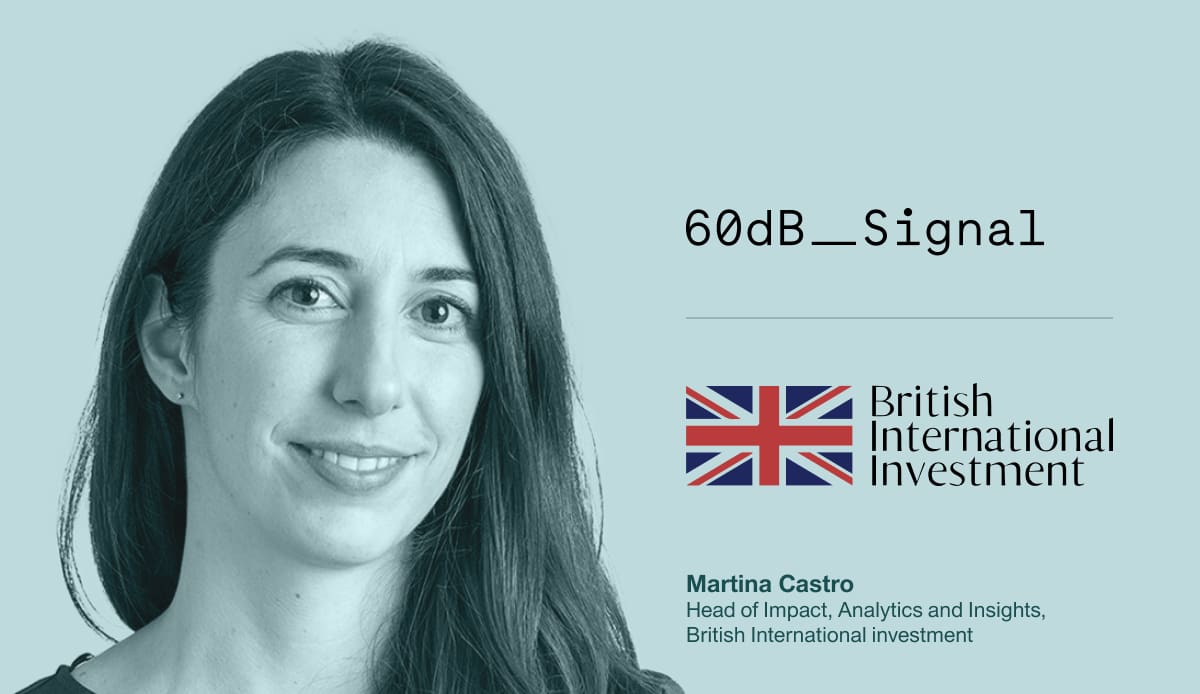
How BII Uses 60dB Signal for Faster, Data-Driven Impact Investment Decisions
Key Takeaways
- BII uses 60dB Signal to estimate poverty reach when full surveys aren’t feasible during deal diligence
- Signal is reducing reliance on conservative country-level proxies, enabling more accurate impact scoring
- In one Uganda e-mobility deal, Signal data showed 70% of drivers reached were low-income, strengthening the investment case
- Signal helps BII identify best-in-class impact performers and shape their 5-year strategy
What is 60dB Signal?
60dB Signal is an impact intelligence platform that puts like-for-like benchmarks of risk and social performance at investors’ fingertips. Investors can estimate poverty reach and impact performance immediately, speeding up the deal process and powering it with better data. Signal draws on 60 Decibels’ benchmark database created through structured interviews with more than 400,000 customers across emerging and frontier markets. Explore 60dB Signal for yourself here.
The Challenge: Moving Beyond Conservative Country Estimates
As the UK’s development finance institution, British International Investment (BII) invests in frontier and emerging markets where impact sits alongside risk and return.
For a decade now, BII has been using 60 Decibels to run surveys on prospective investees and portfolio companies to understand the impact it is having. But where BII doesn’t have good data, it often defaults to assumptions and national averages (for example, the poverty level in Bangladesh) to estimate the inclusive impact of its investments.
More recently, BII has been using 60dB Signal to move beyond conservative country-level estimates. By leveraging like-for-like benchmarks from similar companies, they’re gaining faster, more tailored insights.
We spoke with Martina Castro, BII’s Head of Impact, Analytics and Insights, to explore how Signal is supporting their work—from Investment Committee-ready impact cases to deeper sector-wide analysis.
Can you briefly introduce yourself and your role at BII?
Martina: I head the Impact Analytics and Insights team at BII, which looks at what impact our portfolio is having and feeds these insights back into strategy, asset allocation, and portfolio management—as well as external reporting to our shareholder and the UK tax-payer. I’ve been at BII for the past 9 years, and I have commissioned dozens of surveys and impact assessments (many of which in partnership with 60 Decibels) in this time. I’ve also led the design of our current Impact Score and other key tools in our impact management framework.
How Impact Data Factors Into Investment Decisions at BII
Martina: Maximizing impact is the core of our mission, and naturally, impact is a key factor in driving origination, deal selection, and deal structuring. For each transaction, we assess the positive and negative impacts and use the five dimensions of impact: What, Who, How Much, Risk, and Contribution to think about this. As a DFI, we have a particularly strong focus on contribution and making sure we are delivering impact that otherwise wouldn’t happen. Our investment committee papers also include an Impact Score, a more quantitative valuation tool that uses impact data, like the poverty profile of people reached. Of course, we need to weigh these considerations with risks, including ESG risk, and returns.
Estimating Poverty Reach: The Process Before Signal
Martina: For investments where the primary objective is positively and directly impacting people (for example, by providing them with jobs and economic opportunities or better goods and services), we would try to evidence their poverty profile and the improvement in their lives that the investment delivers. Typically, we used third-party surveys (e.g., with 60 Decibels), or we used proxies to estimate reach and evidence from the literature, such as World Bank poverty briefs. While this gave us decent coverage, in many cases we simply didn’t have the time, resources or research to undertake this assessment, and we could default to using more conservative country scores. Signal has helped massively in bridging the evidence gap. Beyond just helping us assess deals (and fill gaps in our portfolio reporting), Signal is giving us incredibly useful benchmarks, which are helping us benchmark impact performance and know what “good looks like” when it comes to specific sectors, countries, and business models.
Real-World Example: E-Mobility in Uganda
Martina: We were recently considering a e-mobility transaction in Uganda. We didn’t have precedent for this in our portfolio, the literature provided little insight, and we didn’t have the time to run a full survey exercise. We used the data from a very similar company from Signal and approved that as a high-quality match. This allowed us to estimate that 70% of drivers reached were low-income, which made the investment case much stronger. We may very well undertake a 60 Decibels survey on this company down the line to confirm our assumptions, but having this type of data really helps us make more informed investment decisions and prioritize the most impactful deals.
What Signal Has Changed for BII’s Investment Process
Martina: It’s improved accuracy, speed, and confidence in our impact assessment and our scoring, and led to clearer internal processes. In cases where Signal surfaces a company that is a close enough match to the one we are assessing, and where we would have otherwise had to complete a survey to evidence income reach, speed is Signal’s greatest strength. We cannot run surveys on all companies that we consider, particularly in the early stages of diligence, so having Signal help us identify the companies that have the highest potential for impact is a game-changer.
We also see potential to use Signal to help us answer big strategic questions—for example with financial inclusion businesses in India—are they generally moving towards or away from low-income individuals? Where is the sector headed?
Most Valuable Features for Strategic Impact Analysis
Martina: For where I sit in the organization, which is not assessing investments on a deal by deal basis, the Signal features that I find most exciting are the aggregate insights. We are using Signal to get a sense of the type of business models that can drive the greatest impact, and the data from Signal is helping us shape the priorities for the next 5 year strategy. While we may not be quite there yet, it gives you an idea of the expected average impact ROI that you can achieve by investing in different regions or sectors. I also love the interface and find it easy to use—and I can see the tool become increasingly valuable as more data gets fed into it.
Future Applications: Portfolio Monitoring and Origination
Martina: While we have been primarily using Signal to guide assessment of expected impact during the investment process, the natural next step for us is to use it for impact monitoring. We lack good data about our portfolio, and with 1,500 companies, it’s simply impossible for us to survey every investee. Signal data is an obvious solution to help fill some of the data gaps we have. I also think it can play a role in origination and help investment teams identify best-in-class performers in specific sectors. Hopefully, that also incentivises companies to share their data and undertake more surveys.
Advice for Other DFIs Considering Signal
Martina: Signal is a great jumping off point for both evidence gathering and mapping opportunities. It helps provide insight, for example, if certain business models are providing inclusive outcomes. It’s valuable for building a clearer picture of sector impact and as a first stop for impact evidence. I can see it becoming an essential part of how DFIs think about impact performance monitoring and meeting the sector’s ambition for better outcome data.
Frequently Asked Questions
How does impact data factor into investment decisions at DFIs like BII?
Impact is a key factor driving origination, deal selection, and deal structuring. DFIs assess positive and negative impacts using frameworks like the five dimensions of impact (What, Who, How Much, Risk, and Contribution), with a strong focus on delivering impact that otherwise wouldn’t happen. Investment Committee papers include quantitative tools like Impact Scores that incorporate data on the poverty profile of people reached.
What is the typical process for estimating poverty reach without Signal?
Without tools like Signal, DFIs typically use third-party customer surveys, proxies to estimate reach, or evidence from literature such as World Bank poverty briefs. When time, resources, or research aren’t available, they often default to conservative country-level scores, which may underestimate the true impact of specific investments.
How does 60dB Signal improve the investment process?
Signal improves accuracy, speed, and confidence in impact assessment by providing like-for-like benchmarks from similar companies. This is particularly valuable in early-stage diligence when there isn’t time for full surveys, helping identify high-impact potential deals faster and with stronger evidence.
What are the most valuable Signal features for DFIs?
For strategic teams, aggregate insights are particularly valuable—understanding which business models drive the greatest impact and informing long-term strategy. The platform also supports deal-level assessment, portfolio monitoring at scale, and identification of best-in-class impact performers in specific sectors.

Martina Castro
Director and Head of Analytics and Insights – British International Investment.
Martina leads the organisation’s impact measurement and analytics strategy, ensuring robust frameworks for investment processes and KPI alignment. With over a decade of experience in impact management and economic development, Martina has worked across Africa and South Asia, advising on private sector development and designing systems that drive measurable outcomes.